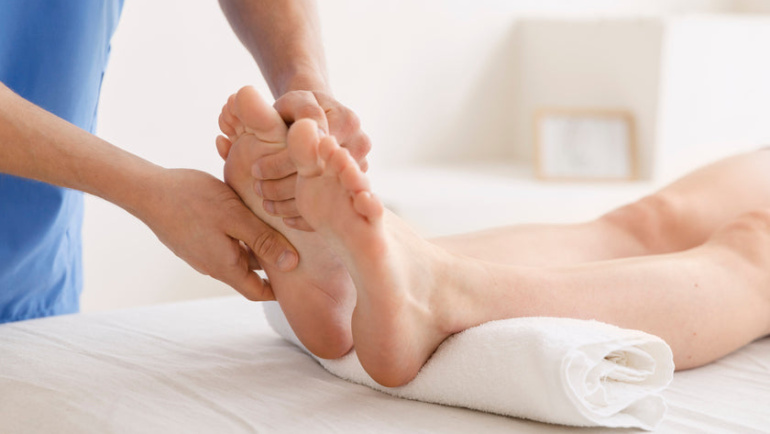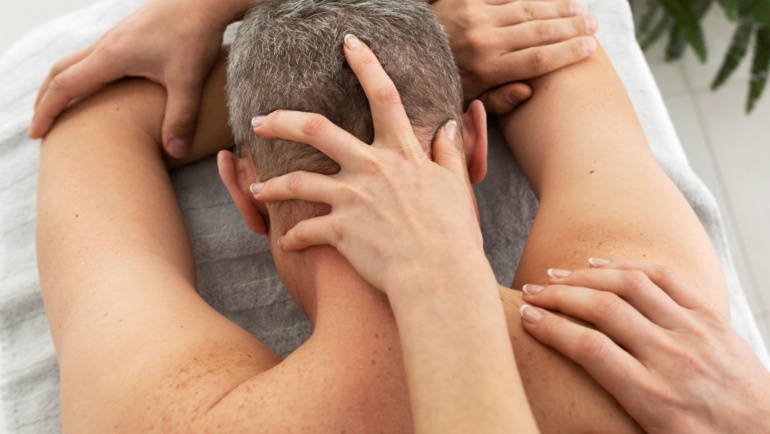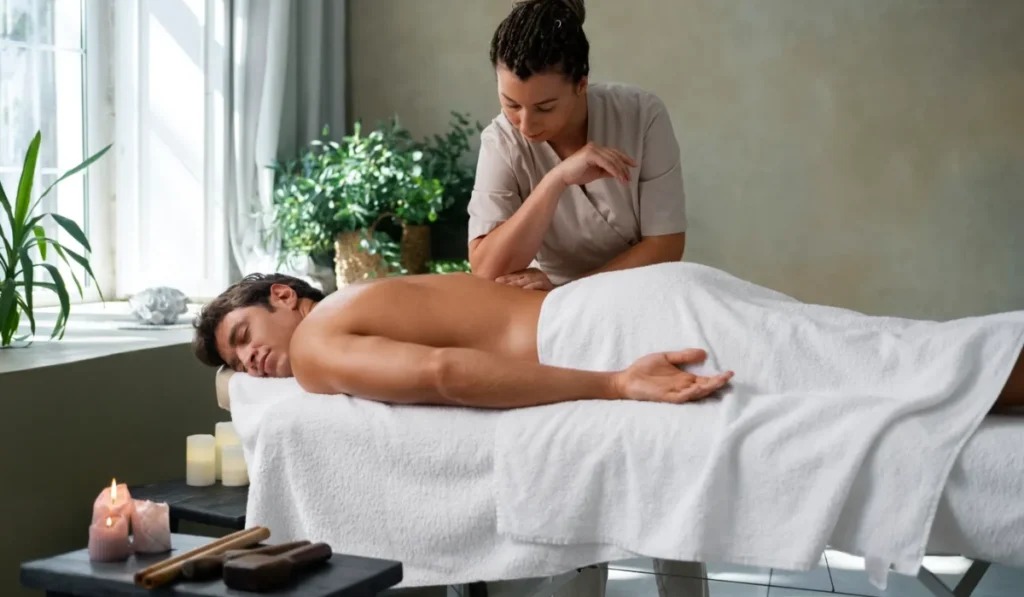
Massage and simple rubbing can both involve applying pressure to the body, but they are not necessarily the same experience. A quick rub may help ease temporary muscle discomfort, while professional massage typically involves specific techniques, an understanding of anatomy, and an approach tailored to the client’s needs.
Understanding the differences can help you decide which option is appropriate for muscle tension, relaxation, or recovery after physical activity.
What Is a Body Rub?
A body rub generally refers to rubbing or applying pressure to the skin and underlying soft tissues using the hands. The term can describe anything from a brief, informal rub to a more organised session focused on relaxation.
A simple rub may involve:
- Gently rubbing a tight shoulder or sore calf.
- Applying light pressure to an area that feels tense.
- Using slow, repetitive movements to encourage relaxation.
- Applying lotion or massage oil to reduce friction against the skin.
The phrase rub massage is sometimes used to describe these basic rubbing movements or informal massage sessions. However, the terminology is not standardised, so the exact meaning depends on the provider and context.
A simple rub can be useful when discomfort is mild and temporary. It generally does not involve the same level of assessment, technique selection, or individual planning associated with a professional treatment.
What Is Professional Massage?
Professional massage is a structured treatment in which a trained practitioner applies manual techniques to muscles and other soft tissues. The approach can vary depending on the client’s goals, physical condition, comfort level, and preferences.
Before beginning, a practitioner may ask about areas of discomfort, previous injuries, medical conditions, and the type of pressure the client prefers. This information helps guide the session and identify situations where certain techniques should be avoided.
Common approaches include:
- Swedish massage: Uses flowing strokes and varying pressure to promote relaxation.
- Deep tissue massage: Applies slower, more targeted pressure to address deeper areas of muscle tension.
- Medical massage: Focuses on specific symptoms or functional concerns within the practitioner’s scope of practice.
- Sports massage: Uses techniques selected for the needs of physically active people, including muscle preparation and post-exercise recovery.
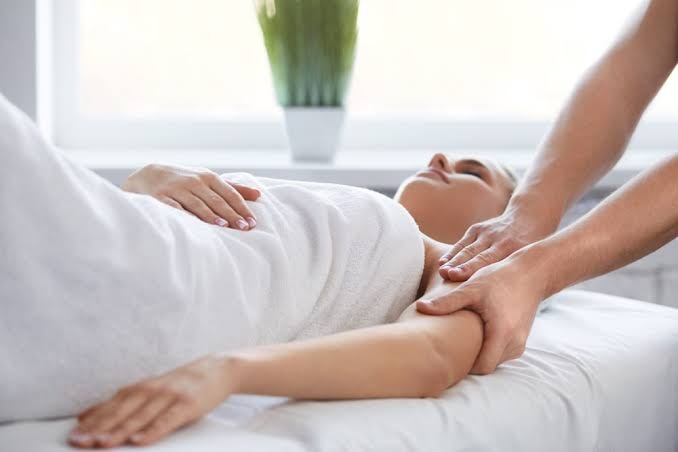
At Lenox Hill Massage, clients can explore different massage options based on their needs. The most appropriate technique depends on the reason for treatment rather than simply how much pressure is applied.
Body Rub vs. Massage: Key Differences
Although the two approaches can share similar movements, the main differences involve purpose, technique, practitioner expertise, and how the session is planned.
Techniques and Pressure
A simple rub usually relies on basic movements such as stroking, rubbing, and gentle pressure. The intensity may change according to the person’s comfort, but the approach is often informal.
Professional massage can incorporate a wider range of techniques, including kneading, sustained pressure, rhythmic movements, and targeted work on particular muscle groups.
More pressure does not automatically mean a better result. The appropriate intensity depends on the treatment goal, the area being worked on, and the client’s tolerance.
Purpose and Intended Benefits
An informal rub is often intended to provide immediate comfort or relaxation. It may be sufficient when someone wants brief relief after sitting for a long time or experiencing mild muscle tightness.
Professional treatment can have a more specific objective, such as reducing perceived muscle tension, supporting relaxation, or addressing discomfort associated with muscular overuse.
The potential benefits depend on the technique, the person’s condition, and the available evidence. Massage is not a guaranteed solution for every type of pain or injury.
Training and Professional Expertise
Anyone can perform basic rubbing movements, but professional massage requires training in manual techniques, anatomy, hygiene, client communication, and relevant safety precautions.
A qualified practitioner should also recognise when a symptom may require medical assessment instead of massage. This is particularly important when discomfort is severe, unexplained, or accompanied by other concerning symptoms.
Session Structure and Personalisation
An informal rub may focus on one area for a short period without a detailed plan. A professional session typically follows a more organised process.
| Feature | Simple Rub | Professional Massage |
| Main purpose | Brief comfort or relaxation | Treatment tailored to the client’s goals |
| Techniques | Basic rubbing and light pressure | A broader selection of manual techniques |
| Personalisation | Usually informal | Adapted to individual needs and preferences |
| Assessment | Often minimal | May include questions about symptoms and health history |
| Duration | Often brief or flexible | Usually follows a scheduled session |
| Safety considerations | Depends on the person performing it | Should include screening and appropriate precautions |
Neither option is automatically suitable for every situation. The choice should depend on the symptoms, the desired outcome, and whether there is a reason to seek professional advice.
Does Rubbing Sore Muscles Help?
Gentle rubbing may temporarily make sore muscles feel more comfortable. Light pressure and repetitive movements can feel soothing, particularly when the discomfort follows ordinary physical activity or prolonged periods in one position.
However, the response varies from person to person. Rubbing does not necessarily repair injured tissue or address the underlying cause of persistent pain.
A few practical guidelines can help:
- Start with gentle pressure and stop if discomfort increases.
- Avoid aggressive rubbing over bruises, swelling, open wounds, or areas of suspected injury.
- Do not forcefully manipulate a joint or attempt to stretch a painful muscle beyond its comfortable range.
- Allow time for recovery after strenuous exercise rather than repeatedly applying pressure to a very sore area.
- Seek medical advice if pain is severe, persistent, or associated with significant swelling, weakness, numbness, or difficulty moving.
If muscle soreness is mild, gentle movement and rest may also help. If symptoms continue or repeatedly return, a professional assessment can help determine whether massage is appropriate.
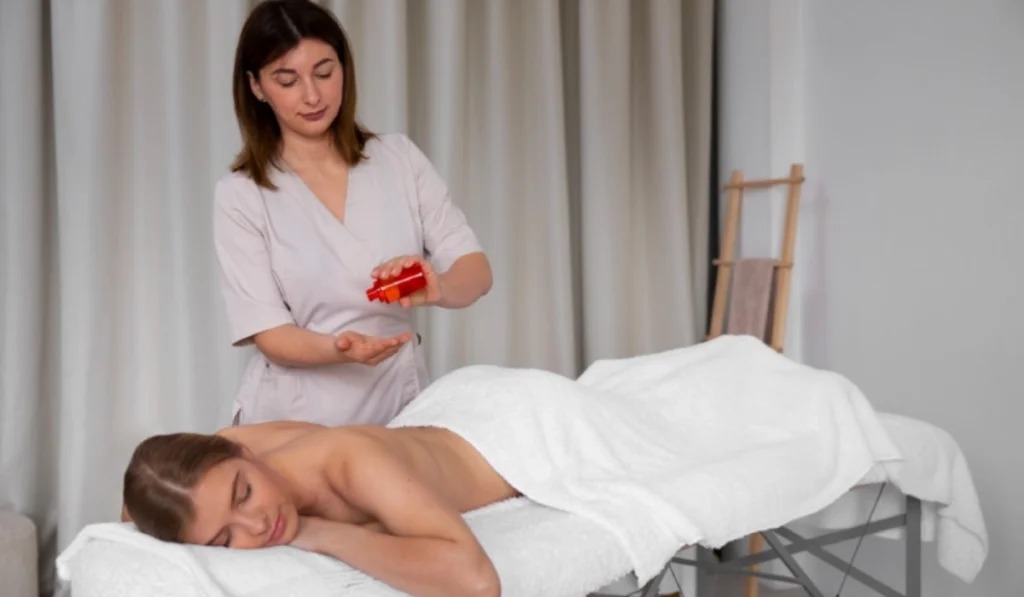
Benefits of Professional Massage
The potential benefits of professional massage depend on the technique used and the individual’s circumstances. Massage may support relaxation and provide temporary relief from certain types of muscular discomfort, but outcomes are not identical for everyone.
Relief From Muscle Tension
Targeted manual techniques may help reduce the sensation of tightness in muscles that feel tense after prolonged sitting, repetitive movements, or physical activity.
A practitioner can adjust the pressure and focus on particular areas rather than relying on the same movements throughout the session. This may be useful when tension affects several connected muscle groups.
Improved Relaxation
Massage can provide a period of quiet, focused relaxation. Slow, rhythmic movements and a comfortable environment may help some people feel less stressed and more at ease.
Relaxation is a reasonable goal for many clients, although massage should not be considered a replacement for appropriate medical or mental health care.
Support for Mobility and Recovery
When muscle tension contributes to a feeling of stiffness, massage may temporarily improve comfort and make movement feel easier. Some people also use massage as part of their recovery routine after training.
For more targeted treatment, deep tissue massage may be considered when deeper pressure is appropriate and well tolerated. Those who need a more specific approach to physical discomfort can also explore medical massage.
Massage should complement, rather than replace, suitable rehabilitation, exercise, and medical care when these are needed.
What Is the Difference Between a Body Rub and a Massage at a Spa?
The distinction between a body rub and a spa massage is not always clear because terminology varies between businesses. Some providers use the term body rub for a relaxation-focused service, while others describe their treatments by technique, such as Swedish or deep tissue massage.
Searches for what is a body rub massage often reflect uncertainty about whether the service is informal rubbing or a structured treatment. The name alone does not establish the techniques used, the provider’s qualifications, or the expected outcome.
Similarly, the query what is a body rub vs massage spa can refer to the difference between a basic rubbing session and a massage offered in a spa setting. A spa may provide professional treatments, but the setting itself does not guarantee a particular standard of training or care.
Before booking, check the following details:
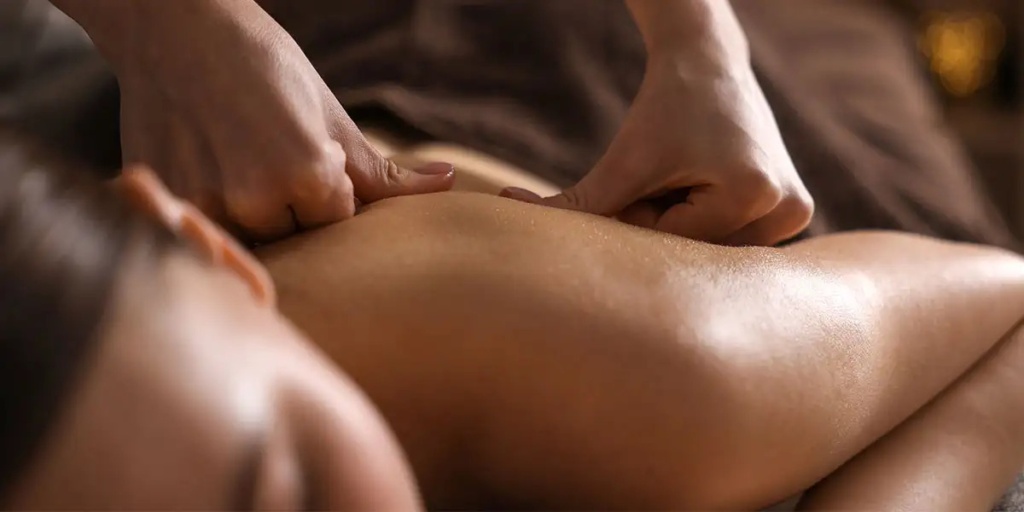
- Service description: Confirm which techniques are included and what the session is intended to provide.
- Practitioner qualifications: Look for relevant training and credentials.
- Pressure options: Ask whether the intensity can be adjusted to your comfort.
- Safety procedures: Check whether the provider asks about injuries, medical conditions, and contraindications.
- Professional boundaries: Ensure that the service description, consent process, and expectations are clear.
These details provide a more reliable basis for comparison than the service name alone.
How to Choose Between a Simple Rub and Professional Massage
The right option depends on the type of discomfort, how long it has lasted, and what you want to achieve.
A simple rub may be reasonable for mild, short-lived muscle tightness when there are no signs of injury. Professional massage may be more appropriate when you want a structured session, need techniques adapted to your preferences, or regularly experience muscle tension.
Use the following guide when making your decision:
- For brief, mild tightness: Try gentle rubbing or comfortable movement, provided these do not worsen symptoms.
- For general relaxation: Consider a relaxation-focused treatment such as Swedish massage.
- For persistent muscular tension: Discuss your symptoms and preferred pressure with a qualified practitioner before choosing a technique.
- For exercise-related discomfort: Consider whether sports massage is suitable for your activity level and recovery needs.
- For unexplained or worsening pain: Seek medical advice before attempting to treat the area with massage.
A professional session is not necessarily better for every minor ache, and a simple rub is not a substitute for assessment when symptoms suggest a more significant problem.
Ultimately, the difference lies in the approach. Basic rubbing offers a straightforward way to apply pressure, while professional massage provides a more structured service with technique selection, individualisation, and safety considerations.