

Deep tissue massage uses focused pressure and slower techniques to work with deeper layers of muscle and areas of persistent tension. At Lenox Hill Massage & Physical Therapy, each session is adapted to the areas that need attention and your comfort with pressure.
60 Minutes | $140
Benefits of Deep Tissue Massage
Deep tissue massage is often chosen when muscle tension feels persistent or when certain areas remain tight despite stretching, movement, or lighter massage. The therapist uses controlled pressure and focused techniques based on how your muscles respond during the session.
Depending on your needs, deep tissue massage may help:
- Ease persistent muscle tension in areas such as the back, neck, shoulders, hips, and legs.
- Work with tight muscles and localized knots that can develop from repetitive activity, exercise, or prolonged positions.
- Reduce muscle soreness and stiffness after physical activity or demanding daily routines.
- Support comfortable movement and flexibility by addressing areas that feel tight or restricted.
- Target overworked muscle groups affected by sports, exercise, physically demanding work, or long periods at a desk.
- Provide focused pressure where needed rather than treating every area of the body with the same intensity.
- Promote relaxation while addressing deeper areas of muscular tension.
A deep tissue massage for sore muscles can focus on the areas that feel particularly overworked while allowing the therapist to adjust pressure according to your sensitivity and comfort.
Deep tissue massage is not intended to diagnose or treat an underlying medical condition. Persistent or unexplained pain, significant swelling, recent injuries, or other concerning symptoms should be evaluated by an appropriate healthcare professional.
Deep Tissue Massage for Knots and Muscle Tension
Muscle knots can feel like localized areas of tightness or tenderness and may develop after repetitive movements, exercise, prolonged sitting, or other physical demands. They are commonly noticed around the shoulders, upper back, neck, lower back, and hips.
A deep tissue massage for knots uses focused, controlled pressure to work with these areas and the surrounding muscle tissue. Rather than simply applying maximum pressure, the therapist can gradually adjust the intensity according to the location of the tension and how your body responds.
The session may focus on one particularly tight area or several muscle groups. If an area is sensitive, tell your therapist so the technique and pressure can be modified. Deep tissue work can feel intense at times, but it should remain within a tolerable range and should not require you to endure sharp or severe pain.
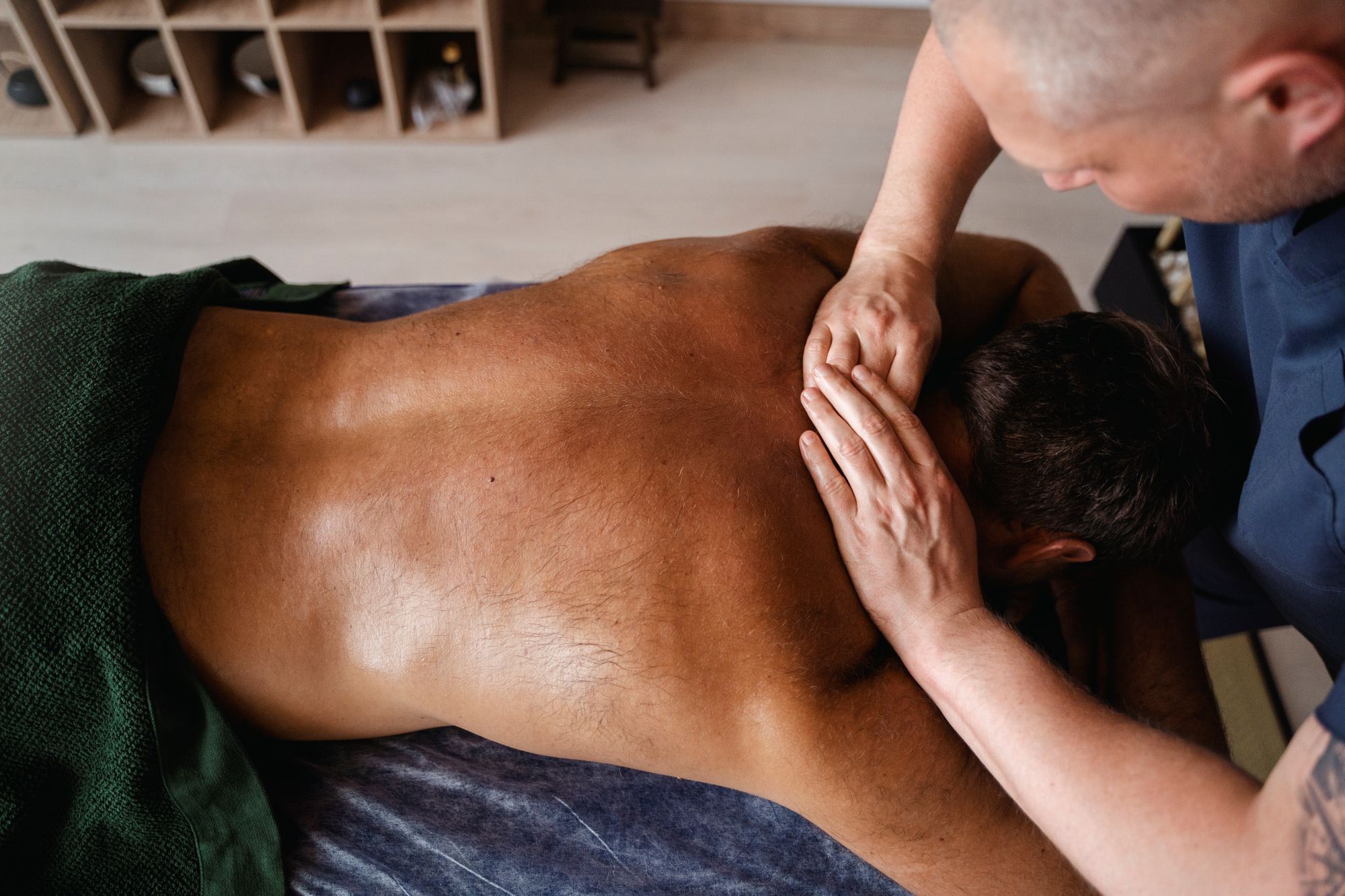
Techniques Used in Deep Tissue Massage
Deep tissue massage can combine several techniques to work with different types and patterns of muscle tension. The specific approach depends on the areas being treated and the amount of pressure that is appropriate for you.
Techniques may include:
- Slow, focused strokes: Deliberate movements allow the therapist to gradually work with deeper layers of muscle rather than immediately applying intense pressure.
- Stripping techniques: Sustained pressure may be applied along the length of a muscle using the fingers, knuckles, forearm, or elbow to address areas of tightness.
- Friction techniques: Controlled movements across a localized area can be used to work with particularly tight tissues.
- Myofascial techniques: Sustained pressure and movement may be used to address restrictions in the fascia and surrounding soft tissues.
- Trigger point techniques: Focused pressure can be applied to specific sensitive or tight points within a muscle when appropriate.
Deep tissue does not necessarily mean that every part of the massage will use heavy pressure. Your therapist can vary the intensity throughout the appointment, spending more time on areas that require focused work while using lighter techniques where appropriate.
Who Can Benefit from Deep Tissue Massage?
Deep tissue massage may be considered by people with different lifestyles and activity levels. Athletes and physically active clients may use it as part of their bodywork routine when certain muscles feel tight or overworked after training.
Office workers and people who spend extended periods sitting may notice recurring tension through the neck, shoulders, and back. People with physically demanding jobs or repetitive movement patterns may also develop areas of muscular tightness that benefit from more focused hands-on work.
Deep tissue massage can also be an option for clients who find that lighter massage does not provide enough pressure for their preferences. The session can be adjusted to concentrate on the areas that matter most rather than following the same routine for every client.
If you have a recent injury, have undergone surgery, take medications that affect bruising or bleeding, or have a medical condition that could affect massage, discuss this with your therapist and healthcare provider before treatment.
Deep Tissue Massage at Lenox Hill Massage & Physical Therapy
Our deep tissue massage sessions are available at 261 E 78th St in Manhattan, conveniently located on the Upper East Side. Each appointment is tailored to your areas of tension, pressure preferences, and goals for the session.
If you are searching for deep tissue massage near me in NYC, Lenox Hill Massage & Physical Therapy provides individualized massage care with the option to focus on specific muscle groups or broader patterns of tension.
Learn more about Lenox Hill Massage & Physical Therapy and our massage and physical therapy services. We also work with medical insurance for eligible services and plans; coverage and requirements vary, so confirm the details before your appointment.
If you have questions about whether deep tissue massage is appropriate for you, insurance coverage, or scheduling, contact our team.
2 Comments
I have severe tension in my neck (left side) which gets extended to my left arm—having difficulties sleeping as a result. I have tried different deep tissue messages, I feel a relieving sensation for a short period of time but it goes back to square one. It started about 1 year ago.. comes and goes but has intensified over the last two months. I have gone back to the gym to work on my arms and back but hasn’t made any difference. Can you help? What makes your deep tissue massage different from others? What would be the cost of a therapy session?
Any feedback would be greatly appreciated.
You can call us any time 6467558838